Sometimes the safest thing you can do is recognize that you shouldn't keep driving.

SHE FILES UTAH
SAFETY & WELLBEING
Driving can feel automatic. You get in, start the car, and head where you need to go. But your brain does not leave the rest of your life behind when you close the car door.
Stress, anxiety, exhaustion, bad news, physical symptoms, an argument, or simply having too much running through your head can follow you behind the wheel. Sometimes we do not realize how much of our attention is already occupied until we are driving.
I've learned that there are times when pushing through is not the safest choice. I've had moments when stress caused physical symptoms to flare while I was driving, and other times when I realized I was simply too overwhelmed to give the road the attention it deserved. Sometimes I've pulled over and given myself time to settle before continuing.
Getting somewhere is not more important than recognizing when your body or brain needs a break.
A Resource Worth Reading!
I recently came across How to Manage Your Emotions While Driving from The Stephens Law Firm Accident Lawyers. Their guide looks at how stress, anxiety, frustration, fatigue, and other emotions can affect us behind the wheel, along with practical ways to manage those emotions before and during a drive. It got me thinking about something I have experienced myself: What happens when life is already overwhelming, but you still have somewhere you need to go?
Read the original guide from The Stephens Law Firm
Distraction Isn't Always a Phone
When we hear distracted driving, most of us probably picture a phone. But distraction is broader than that. The Utah Highway Safety Office separates distraction into three categories: visual distraction, which takes your eyes away from the road; manual distraction, which takes your hands away from driving; and cognitive distraction, which takes your mind away from driving.
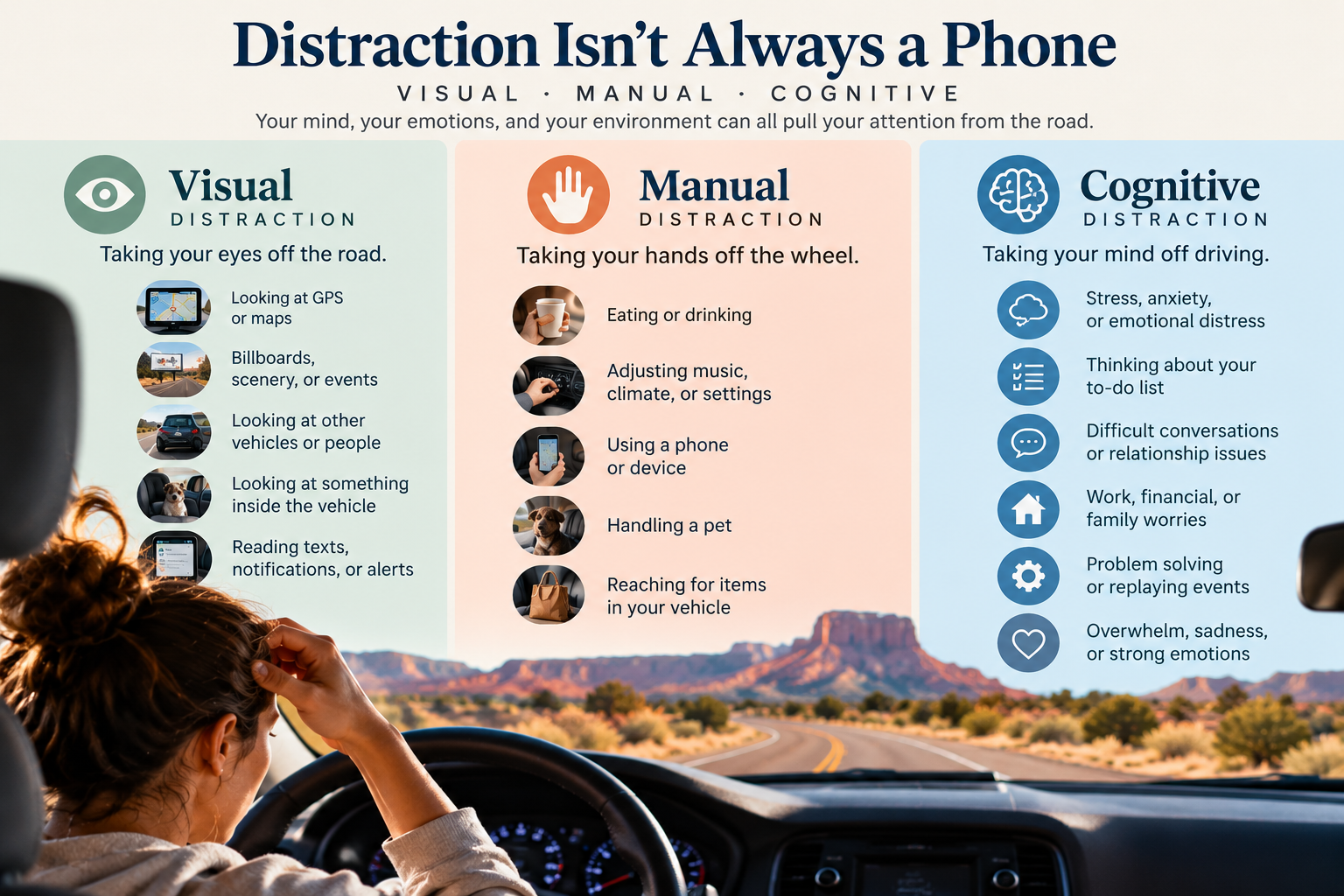
That last category matters here. You can have both hands on the steering wheel and both eyes looking forward while part of your attention is somewhere else. You might be replaying an argument, worrying about money, processing bad news, mentally solving a work problem, grieving, or simply feeling overwhelmed.
Those experiences are not excuses for unsafe driving. They are reasons to recognize that attention is a limited resource. In a small simulated-driving study of 27 drivers, experimentally induced state anxiety was associated with poorer speed control, more collisions, and changes in visual attention. The study does not tell us how every anxious driver will perform, but it supports a practical point: mental state can affect a task that depends on continuous attention and judgment.
Stress Can Create a Loop
There is another part of this that we do not talk about enough. You are already stressed. Then you miss an exit, realize you are going faster than you intended, or have trouble getting into the lane you need. Instead of simply correcting the mistake, your brain piles on: Why did I do that? Pay attention. What is wrong with me today?
Now you are more stressed than you were thirty seconds ago, and the increased stress makes concentrating even harder. The goal is not to excuse a driving mistake. It is to interrupt the loop before one stressful moment becomes five more stressful moments.
When Is It Time to Pull Over?
There is not one universal emotional threshold where a person suddenly becomes too stressed to drive. It can help to look at what is actually happening rather than asking whether you should be able to handle it.
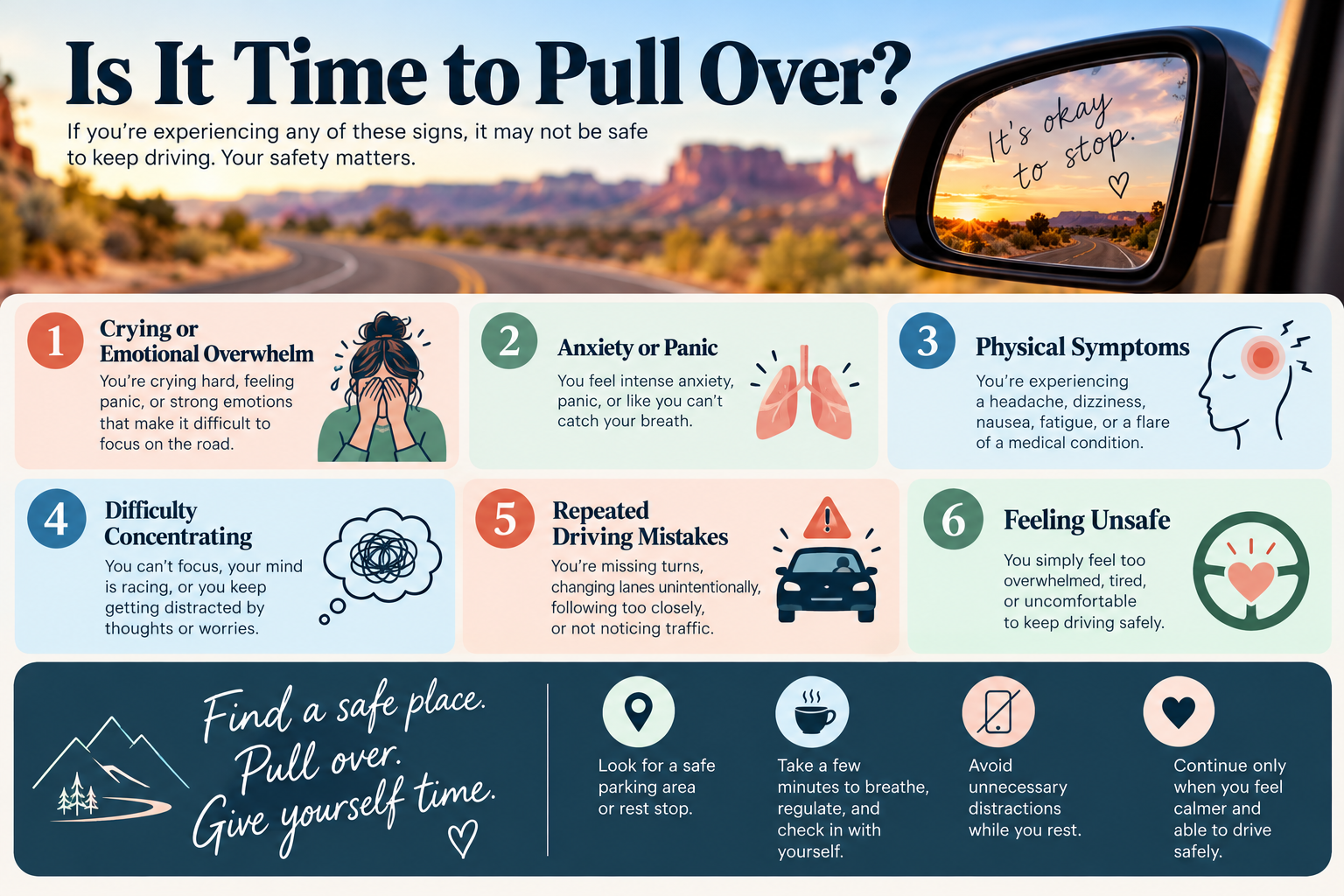
If you recognize that stress, panic, physical symptoms, or loss of concentration are interfering with your ability to drive safely, treat that recognition as useful information rather than something to push through.
Find a safe place to stop, such as a parking lot, rest area, or designated pullout. Put the vehicle in park and give yourself time to settle before deciding whether you are ready to continue.
Stress and Fatigue Aren't the Same Thing
Emotional overload and drowsiness can overlap, but they are not interchangeable. Fatigue deserves special attention because your own perception of how well you are functioning is not always a reliable safety test. CDC/NIOSH says fatigue can slow reactions, impair decisions, contribute to lane drifting and tunnel vision, and cause microsleeps.
4,879
Utah crashes involving drowsy drivers, 2020-202456%+
of drowsy-driver crashes involved failure to stay in the proper lane
A Utah-specific comparison makes the risk easier to picture: the Utah Highway Safety Office reports that being awake for over 18 hours produces cognitive decline comparable to a 0.05% BAC, Utah's legal limit. After 24 hours awake, the reported impairment is comparable to a 0.10% BAC.
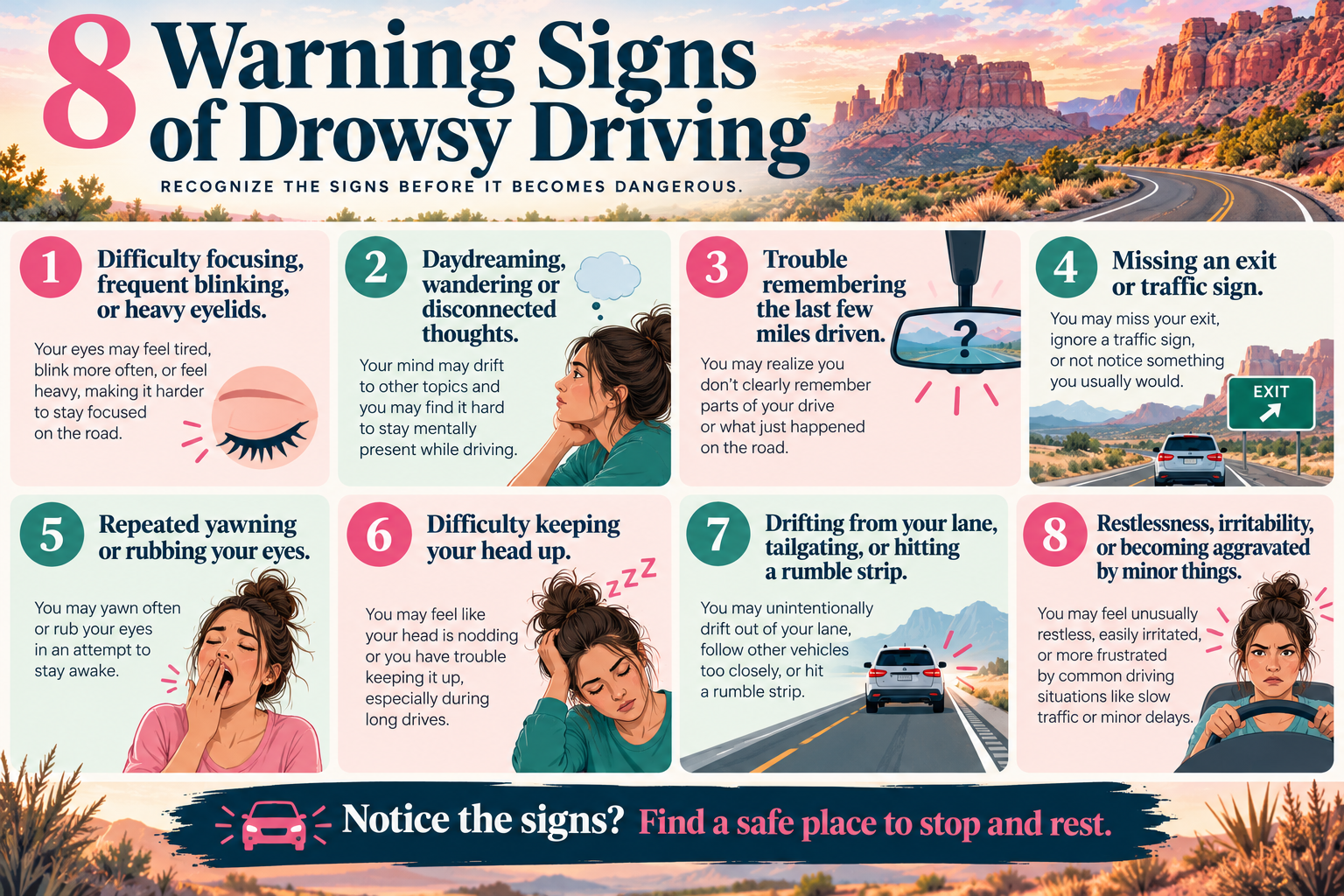
8 Warning Signs of Drowsy Driving
Utah Highway Safety Office guidance identifies eight warning signs of drowsy driving. If you notice any of them, pull over to a safe place and rest:
You Can't Will Yourself Out of Fatigue
This is where 'I'm almost home' can become dangerous. Opening the window, turning the music up, telling yourself to concentrate harder, or deciding you are only twenty minutes away does not replace sleep.
NHTSA warns that caffeine alone may not be enough for someone who is seriously sleep deprived. As a short-term measure when sleepiness develops, NHTSA recommends getting to a safe place, drinking one or two cups of coffee, and taking a short nap of about 20 minutes. Caffeine is not a substitute for adequate sleep.
Before You Put the Car in Drive
A 10-Second Check
• Am I alert enough to drive?
• Am I emotionally regulated enough to concentrate?
• Are physical symptoms interfering with me right now?
• Am I rushing because I am late?
• Is something happening that I should deal with before I leave?
Sometimes the safest decision happens before the car ever moves.
You Are Allowed to Pull Over
There can be a strange pressure to keep going. You are almost there. You do not want to be late. You do not want to inconvenience anyone. You feel like you should be able to handle it.
But pulling over is not failing at driving. Recognizing that your current condition is interfering with driving is part of driving responsibly.

You are allowed to pull over
There are moments when the destination can wait. There are moments when your nervous system needs a few minutes to settle. There are moments when fatigue means you need actual sleep, not another song or another cup of coffee.
A missed exit is fixable. Being late is fixable. Needing ten minutes is fixable. Give yourself permission to make the safer choice.
Sources
Utah Highway Safety Office: Distracted Driving
Utah Highway Safety Office: Drowsy Driving
Utah Highway Safety Office: Statewide Problem Identification
CDC/NIOSH: Driver Fatigue on the Job
The Stephens Law Firm: How to Manage Your Emotions While Driving