Law Enforcement
What you can actually do when police fail to act
Last reviewed: April 2025 | Always verify current procedures at the links provided.
This article does not constitute legal advice. It explains processes that exist and how to use them. For legal representation, see our Finding Legal Help resource.
Start here
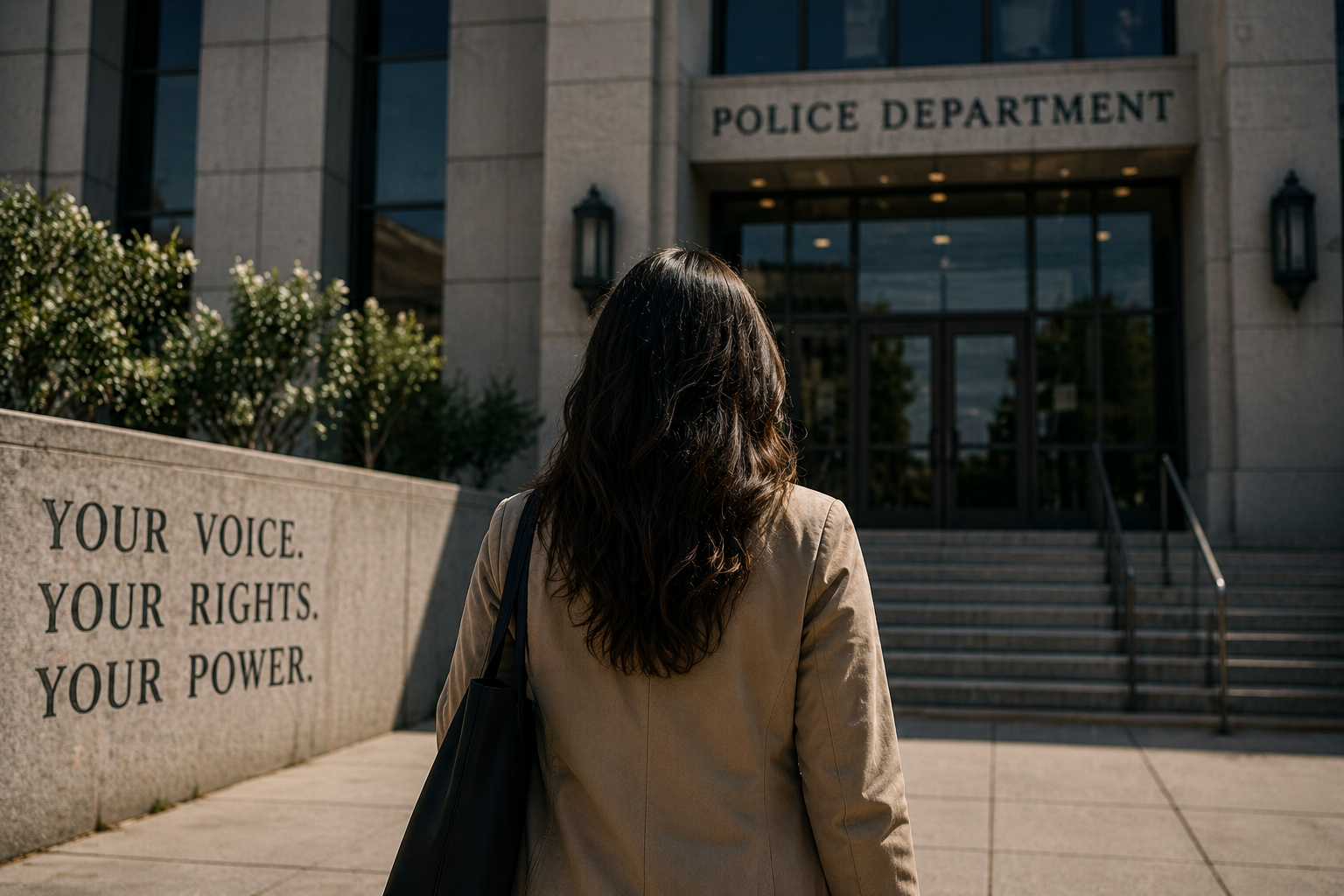
When police fail to respond, fail to investigate, or close your case without action, most people assume there is nothing left to do. That assumption is wrong.
There are multiple systems that exist specifically to address officer conduct and departmental failures. They are not easy. They are not fast. But they are real, and using them creates a record that matters.
This guide covers four tracks: filing with the Utah POST Board, filing with the officer's employing agency, filing with the DOJ Civil Rights Division, and using GRAMA to pull your own records. You may need to use more than one at the same time.
Take back your voice
Whatever it is, the way you tell your story online can make all the difference.
Track 1: Utah POST Board
The Utah Peace Officer Standards and Training Board (POST) is the state agency that certifies peace officers. POST's administrative authority over peace officer certifications is defined in Utah Code 53-6-211(1). That is the specific legal hook you need to understand before you file.
What this means in plain terms: POST does not handle every complaint about police. Criminal and civil rights complaints are outside POST's investigative authority. POST will also not investigate allegations of unprofessional behavior that do not fall under Utah Code 53-6-211(1).
What POST does handle is conduct that could affect an officer's certification, meaning their legal right to work as a peace officer in Utah. Dishonesty, falsifying reports, and serious misconduct can fall under this authority.
How to file a complaint with POST:
POST currently offers four ways to file. Always verify the current process at post.utah.gov/post-complaint-process before you file, as procedures can change.
Online form: POST uses an online Complaint Intake Form. The current form is hosted as a Google Form and the link is on their complaint page. This is the method the founder of She Files Utah used to file her own complaints.
Mail: Utah Peace Officer Standards and Training, Attn: POST Investigations, 410 West 9800 South, Sandy, UT 84070
Phone: Call 801-256-2300 and ask to speak with a POST Investigator. Available Monday through Thursday, 8:00 a.m. to 5:00 p.m.
In person: Same address and hours as above. Appointment required.
Procedures and contact information are subject to change. Always confirm current filing methods directly at post.utah.gov/post-complaint-process before submitting your complaint.
What to expect after you file:
Once an investigation is opened, the officer and the chief administrator of their employing agency will both be notified by mail. Investigators will interview the officer, witnesses, and others as appropriate. If the case proceeds, it goes to an Administrative Law Judge and then to the POST Council. Cases can take up to a year or more to complete.
One thing to know before you file:
POST explicitly warns that knowingly making false accusations against an officer can result in prosecution under Utah Code 76-8-504.5, a Class A misdemeanor. File truthfully, specifically, and with documentation. That is exactly what a genuine complaint requires, and it is your protection too.
What this will NOT do: POST cannot order a criminal prosecution, force an agency to reopen a case, or award you damages. The outcome is limited to what happens to an officer's certification. That said, a POST complaint creates an official record that can support other tracks.
Track 2: The officer's employing agency
This is separate from POST and should be filed separately if both apply.
For agency policy violations or alleged misconduct, file directly with the employing agency such as the police department or sheriff's office. Most agencies have internal affairs or professional standards processes. Contact the agency, ask specifically for that process, and submit your complaint in writing.
Keep a copy of everything you send and note the date and method of delivery. Do not assume an internal investigation will be impartial. File anyway. The paper trail matters.
Track 3: DOJ Civil Rights Division
The DOJ is a federal track and operates independently of Utah state processes.
The Civil Rights Division enforces federal laws that protect you from discrimination based on race, color, national origin, disability status, sex, religion, familial status, or loss of other constitutional rights. If you have been mistreated by law enforcement, the Civil Rights Division can help direct you to the right place.
File online at civilrights.justice.gov. For law enforcement misconduct specifically, you may also contact the FBI directly.
How to write your complaint:
Write in plain language. Do not cite law or legal precedent. Your statement will have more impact if you simply explain what happened, in order, with dates and specifics.
What to expect: The DOJ receives a high volume of reports. Response can take several weeks. Possible outcomes include a follow-up request for more information, a referral to another agency, the opening of a mediation or investigation, or a notice that they cannot help with your specific complaint.
What this will NOT do: Filing a DOJ report does not guarantee an investigation. The DOJ prioritizes cases that affect patterns of conduct or large numbers of people. A single incident complaint may not trigger action on its own, but it contributes to a larger record. If a pattern exists in your area, your filing adds to it.
Track 4: GRAMA records requests
Before or alongside any filing, pull your own records. This is one of the most powerful and underused tools available.
The Government Records Access and Management Act (GRAMA) gives every person the right to request records from any governmental entity in Utah under Utah Code 63G-2-201(1).
For police specifically, GRAMA designates two types of law enforcement records as public:
Chronological logs, which give the general nature of a call, the date and time, and any arrests or jail bookings.
Initial contact reports, which are reports prepared by peace officers describing their initial actions taken in response to a public complaint or the discovery of a possible legal violation.
A governmental entity has ten business days after receiving a written request to provide the record, deny the request, or notify you that more time is needed due to extraordinary circumstances.
How to file a GRAMA request:
Submit it in writing to the specific agency that holds the records. Be precise. Include the dates, your name, the incident or case number if you have it, and exactly what records you are requesting. Keep your request narrow and specific. Broad requests get delayed or denied.
If your request is denied, you have the right to appeal under Utah Code 63G-2-401 through 63G-2-406.
You can also submit requests through Utah's Open Records Portal at openrecords.utah.gov.
Always verify the current GRAMA process at the relevant agency's website before submitting. Each agency manages its own records and may have its own submission portal.
How to document before you file anything
Before you file on any track, your documentation needs to be solid. Write down everything that happened in chronological order while it is fresh. Include:
Dates and times of every interaction
Officer names and badge numbers if you have them
What was said, and what action was or was not taken
Who else was present
Every case number, confirmation, and written response you receive
Contemporaneous notes, meaning notes written at or near the time of the incident rather than weeks later, carry more weight in any proceeding. Save everything. If officers came to your location, note the exact time of arrival and departure.
This documentation is what makes your filings usable. Without it, complaints stall.
What to realistically expect
These processes are slow, imperfect, and weighted toward protecting institutions. That is the honest truth.
What they do provide is a paper trail. An official record that an incident was reported, that you pursued it, and that agencies either acted or did not. That record can support civil litigation, media inquiries, and future complaints if patterns continue.
Filing is not guaranteed to produce the outcome you deserve. Not filing guarantees nothing happens at all.
She Files Utah | shefilesutah.org | This resource is for educational purposes only and does not constitute legal advice.